Deutsch
 English
 Español
 Français
 Magyar
 日本語
日本語 Polski
 Slovenský
 Slovenščina
 中文
中文Drumul operelor muzicale de la autor la interpret
Misiunea editorului de muzică este de a transforma ideile muzicale ale autorilor într-o formă lizibilă, inspiratoare și ușor de utilizat pentru interpreți; de a se ocupa de popularizarea, distribuirea și utilizarea legală a operelor. Cu trei sferturi de secol de experiență în spate, îndeplinim această muncă onorantă cu competență, devotament și entuziasm.
Le mulțumim compozitorilor și pedagogilor de muzică pentru că ne încredințează îngrijirea operelor lor.
Szervánszky, Endre
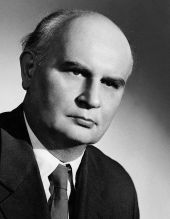 Szervánszky was a master of carefully elaborated forms. Because of his special feeling for quality and his self-discipline his œuvre is not too voluminous, but in respect of their form and richness of tone colour his works are among the finest of their time. In addition to compositions in various vocal and instrumental genres he also wrote music for the theatre and film soundtracks.
From the beginning of his career his art was strongly influenced by the heritage of Bartók. After World War II his inclination towards experimentation and his individual character as a composer became apparent at first in serene and idyllic works. Later the darker tones of more sombre expressivity appeared in his music alongside the pentatonic or modal, tonal sound inspired by folk music, and the shaping became freer.
Szervánszky was the first composer in Hungary to compose twelve-tone music. In his Six Pieces for Orchestra (1959) he adapted the achievements of the second Viennese School within the framework of Hungarian musical tradition. With this composition he paved the way for the younger generations interested in western trends in contemporary music.
Biography
Endre Szervánszky was born in Kistétény (now Budatétény) on December 27, 1911. Between 1922 and 1927 he studied clarinet at the Academy of Music in Budapest, then worked in several orchestras as clarinettist until 1931. Between 1931 and 1936 he studied composition with Albert Siklós at the Academy of Music in Budapest. Until 1941 he taught music theory in music schools and made orchestrations for Hungarian Radio. From 1941 to 1948 he taught composition and music theory at the National Music School in Budapest. From 1949 until his death, he was a professor of composition at the Academy of Music in Budapest. In addition to his work as a composer and teacher, between 1945 and 1949 he wrote music criticism for the Szabad Nép.
His prizes and awards